Menu
Hixenbaugh Ancient Art Ltd is among the world’s most prominent galleries specializing in ancient art. Located at 235 East 60th Street in Manhattan, the gallery is focused on handling fine antiquities from the Ancient World including Egypt, Mesopotamia, Greece and Rome. Under the direction of the founder, Randall Hixenbaugh, the gallery has since its opening in 2003 handled thousands of antiquities worth many millions of dollars. In doing so, we have sourced material from many old collections and placed them with a new generation of discerning collectors across the globe. We have sold antiquities to a number of prominent museums around the world including: the Royal Ontario Museum in Canada, the Museum of Ancient Cultures at Macquarie University in Sydney, Australia, the Cushing Memorial Library at Texas A&M University, the Ball State University Museum of Art, the Michael C. Carlos Museum at Emory University in Georgia, The Houston Museum of Natural Sciences, the Fine Art Museums of San Francisco, the Living Torah Museum in New York, the Royal Academy of History of Madrid in Spain, the Mougins Museum of Classical Art in France, and the August Kestner Museum in Hannover, Germany.
Mr. Hixenbaugh has been involved in ancient art and antiquities for over 30 years. He holds a Master’s Degree in Classical Archaeology and has participated in a number of archaeological excavations of Roman and Punic sites in Tunisia. Hixenbaugh Ancient Art Ltd is a member of the Art and Antique Dealers League of America (AADLA), the Confederation Internationale des Negociants en Oeuvres d’Art (CINOA), and Mr. Hixenbaugh is a board member of the International Association of Dealers in Ancient Art (IADAA) and abides by their strict rules and code of ethics.
Mr. Hixenbaugh has participated in a number of important public discussions relating to matters associated with the antiquities trade. In March of 2016, he spoke at the Committee for Cultural Policy’s panel at the Cardozo School of Law in New York entitled, “Rethinking Antiquities: Restitution and Collecting in the Time of Isis.” In May of 2016 he was invited to speak at the University of Chicago’s Neubauer Collegium for Culture and Society conference as part of a panel of experts in a public discussion entitled, “Dealing with Heritage: New Policy Approaches,” which sought to clarify the relationship between the destruction of ancient cultural sites in the Near East and the international antiquities trade. In October of 2016, he spoke on a panel entitled, “A New Normal for Collecting Antiquities in a Post-Loot Culture,” at TEFAF, New York. In all cases he advocated for responsible collecting and philanthropy as necessities to the long-term preservation and study of ancient art. To that end, in 2019 he wrote, “The Current State of the Antiquities Market, an Art Dealer’s Perspective,” for the academic peer reviewed International Journal of Cultural Property, in a special issue entitled, “New Insights into the Antiquities Market,” published by Cambridge University Press. In 2022, Mr. Hixenbaugh was the honored guest of the University of Illinois at Chicago’s Annual Neurosurgical Forum and delivered a presentation on the development of Greek helmet design as a response to the accumulated understanding of cranial trauma relating to ancient combat.
Mr. Hixenbaugh is a recognized expert in the field of ancient Greek arms and armor. He is the author of “Ancient Greek Helmets: A Complete Guide and Catalog,” (2019). This substantial work is the most comprehensive study ever produced on the subject. The work covers not only the archaeological data relating to the finds of ancient Greek helmets, but also the literary and epigraphic evidence, metallurgical analysis, and art historical considerations. The exhaustive study, cataloging and illustrating over 2500 ancient Greek helmets in both public and private collections worldwide, has become the standard reference work on the subject for both academics and armchair enthusiasts. The second volume is forthcoming.
Hixenbaugh Ancient Art has handled countless important ancient objects including Greek ceramics, Roman marble statuary, Mesopotamian cuneiform texts and cylinder seals, Pre-Columbian art, ancient jewelry, glass, numismatics, and metal work. In addition to museum quality work, the gallery also offers a great deal of more common antiquities for the casual collector or one looking for a unique and timeless gift.
Authenticity, of course, is of paramount importance to all art collectors. Experience, education, and a vast library are the cornerstones that one relies upon to authenticate an ancient piece of artwork. Replicas and forgeries have been produced for well over a hundred years. Capable forgers copy pieces of well-known published types that collectors are most likely to desire. They try their best to use the proper materials and work using ancient techniques. However, they betray themselves in the details of execution. By not following the time consuming conventions of ancient craftsmanship or utilizing tools and materials that were not available to the ancients the work of the modern forger can be detected. On the other hand, some forgers closely mimic ancient techniques and use ancient materials, but misunderstand or misinterpret ancient iconography or aesthetics. In both cases the forger is further challenged by attempting to age or patinate the object to hide its modern authorship. Through detailed analysis and if necessary forensic chemical tests, the specialist is able to detect the forgers work or verify the authenticity of an object. Still another group of fakes are those that were never meant to deceive. Pieces made during the height of the Egyptomania of the 19th century, or for the travelers of the Grand Tour, or in the excitement following the early excavations of Pompeii, Knossos, Etruria or sites in Mesoamerica. These pieces now are indeed antiques but not antiquities. Unfortunately pieces in all of these categories are sometimes passed on by unscrupulous or undereducated dealers and auctioneers. There are both a great number of genuine antiquities and a great number of fakes on the market at any given time. It is the intention of Hixenbaugh Ancient Art to place all objects under the highest level of scrutiny to ascertain their veracity and correct attribution.
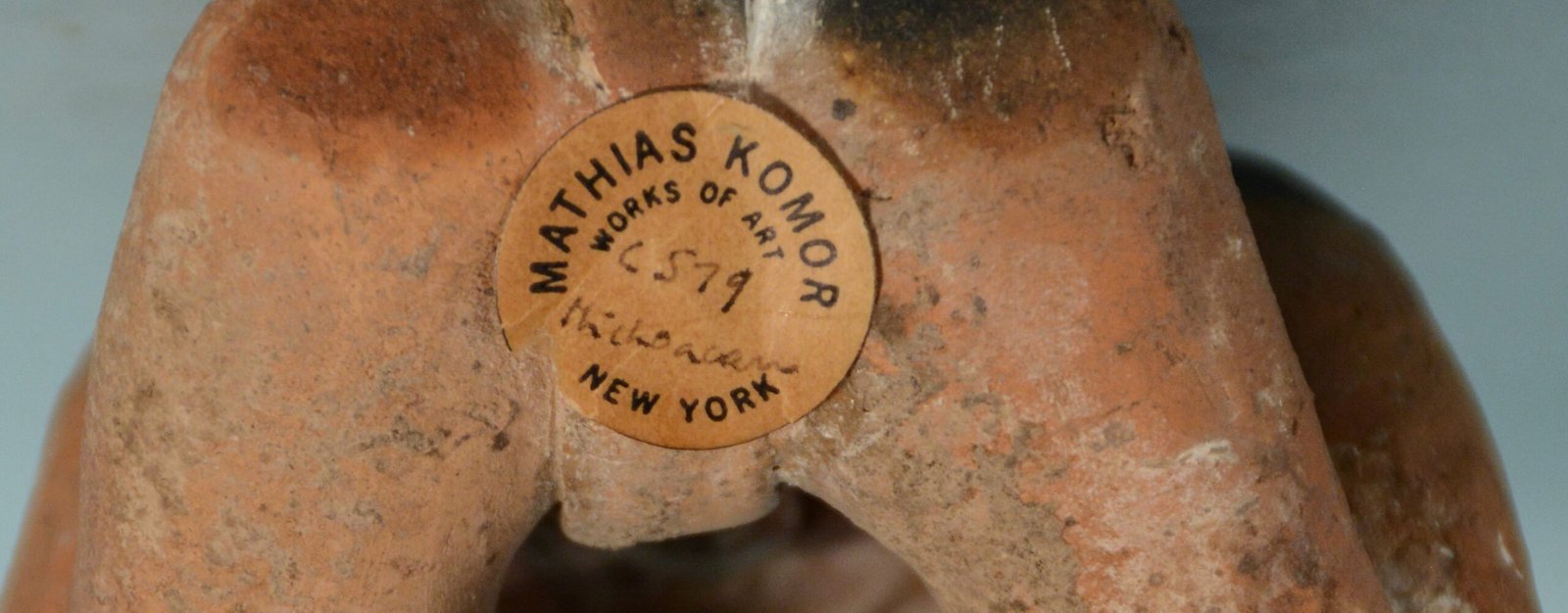
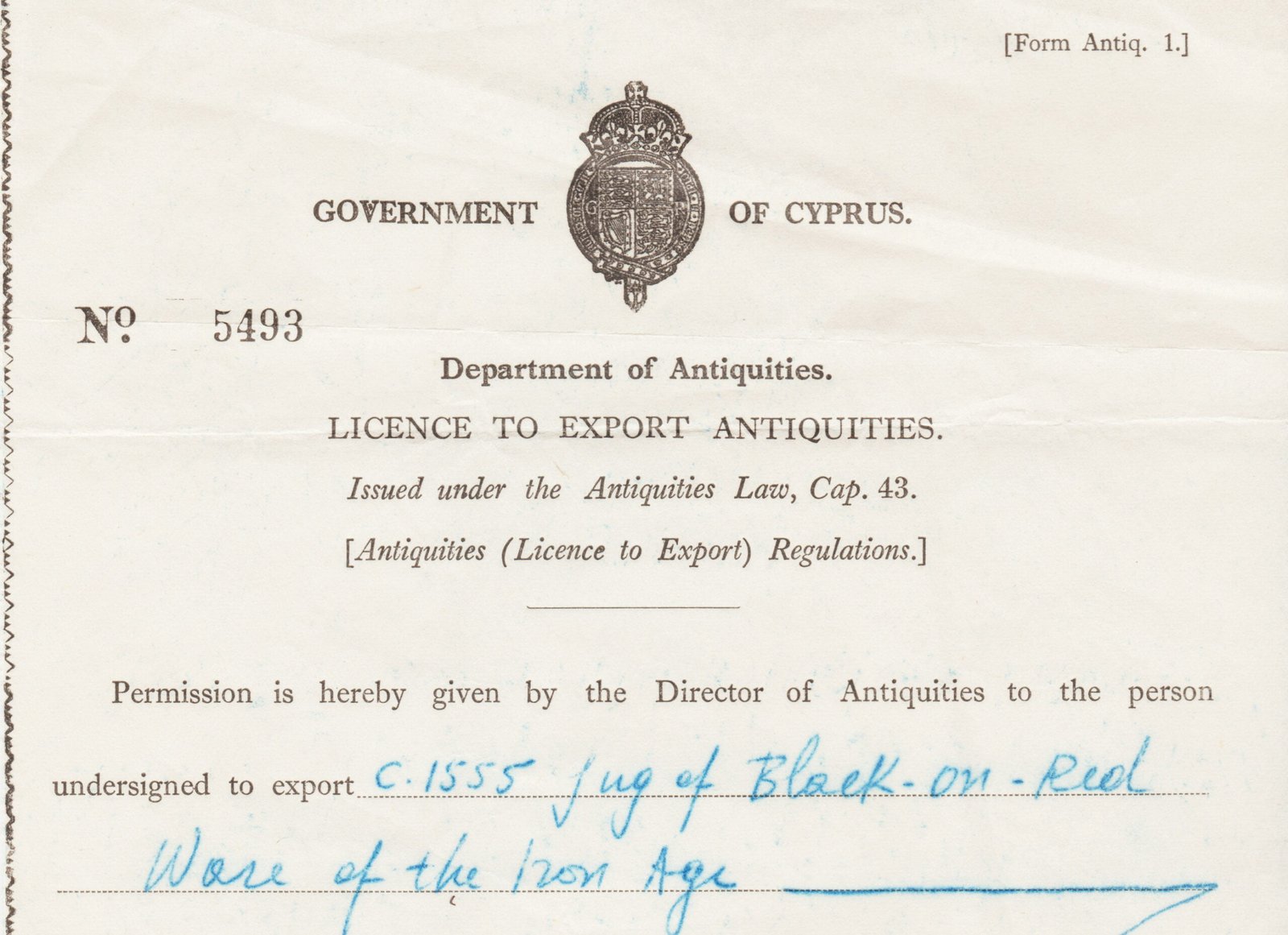
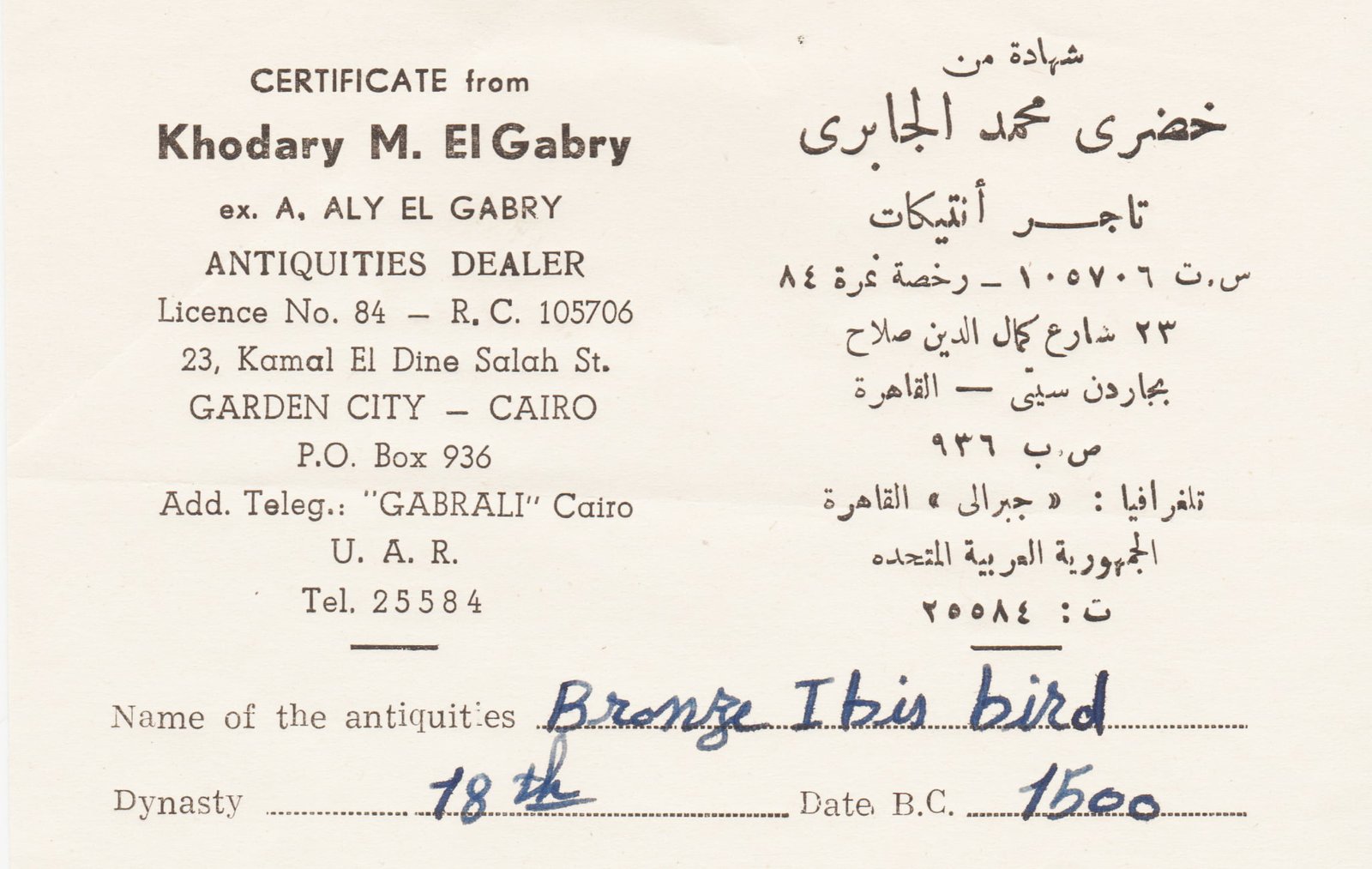
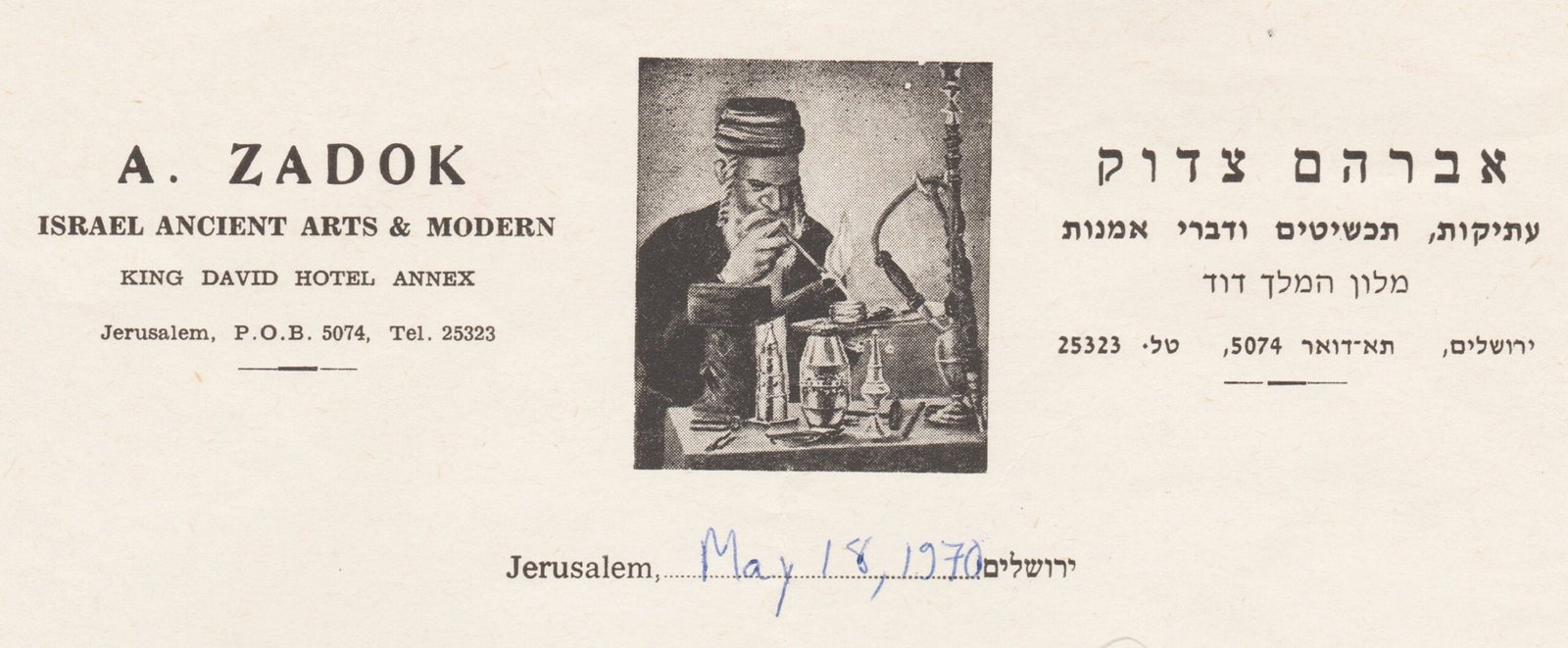
Expertise encompasses not only understanding ancient artwork in terms of authenticity and attribution, but also understanding the broader issues related to the trade in cultural goods. All of the objects we handle have been legally acquired. Most come from collections formed decades if not centuries ago. When we purchase antiquities abroad, they are officially cleared and licensed for export. Upon entry to the United States, they are again examined and cleared by US customs for import. Because of the intense scrutiny that the antiquities trade is currently under, this level of due diligence is both time consuming and costly. We employ lawyers, customs brokers, and other specialists both in the US and abroad in order to keep pace with international laws that relate to the movement of ancient objects. We are aware of and abide by the myriad of laws regulating the antiquities trade including the United States Memoranda of Understanding with various archaeologically rich countries. In doing so we provide our clients with not only beautiful and important ancient artwork, but also responsible and sound investments. Therefore, we believe responsible collecting should not only be tolerated, but encouraged, as collectors act as enthusiastic custodians of a great many objects that would otherwise be relegated to overcrowded storerooms or lost. There is a true pleasure in acquiring, preserving, and cherishing the works of art that have managed to elude the destructive ravages of time and come down to us. These objects represent not only the physical manifestation of the manifold achievements of the ancients, but also the antecedents of all modern culture. The objects will undoubtedly outlive those of us who collect them, but collectors become links in a chain, preserving the past for future generations by passing them on to their heirs, reselling them to eager collectors of the next generation, or donating them to museums. In doing so, the collector of ancient art reaps the many benefits of investing in truly unique and thought-provoking objects that have come down to us from the ancient world, whose influences pervade every aspect of the modern world.



Hours:
Tuesday – Saturday: 11:00-6:00
Sunday & Monday: by appointment
Hixenbaugh Ancient Art Ltd.
235 East 60th Street
New York, NY 10022
Phone: 212-989-9743
Email: info@hixenbaugh.net